

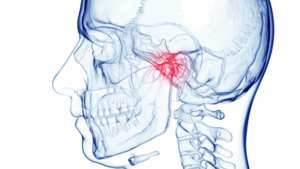
Jaw pain isn’t exactly an uncommon symptom, and it can be caused by sinus infections, muscle tension, sleeping in an unfortunate position, and everything in-between. But if your discomfort is persistent to the point of being chronic, you may have something known as a “TMJ disorder.” With November being TMJ disorder awareness month, now’s the perfect time to learn more about this condition and how it’s treated. Here’s everything you should know about TMJ disorder!
What is A TMJ Disorder?
To understand this, it’s helpful to clarify a few terms first:
- TMJ is short for the temporomandibular joint. This hinge-like joint is located at the two ends of your lower jaw and very close to your ears.
- TMD is a simple abbreviation for “TMJ disorder.”
- Bruxism is the clinical word for teeth grinding and clenching.
- An occlusal splint is a removable, mouthguard-like device that’s worn over the teeth.
So, TMD is when there’s a systemic issue with the temporomandibular joint. For one reason or another, the joint is either fatigued from receiving excess physical stress, or is not aligned properly with the jaw. This can be due to genetic anatomy, injury, bruxism, stress, and other similar problems.
Common TMD Symptoms
Because of its location and how interconnected facial muscles are, TMD can present itself in more ways than one. For example, you might experience:
- Neck pain
- Headaches or migraines
- Discomfort or ringing in the ears
- Difficulties opening and closing your jaw
- “Popping” or “clicking” when you chew or speak
- Jaw pain that comes and goes or is persistent
Should I Seek Treatment for TMD?
It’s highly recommended that you do! For one thing, being in constant discomfort is enough of a reason to seek out treatment. For another, since TMD tends to be a systemic issue, your symptoms will likely get worse with time. In severe cases, it can even restrict your mouth movements or change the position of your teeth.
Non-Surgical TMJ Treatments
Surgery is a last resort when it comes to treating TMD, since it involves drastically altering your facial anatomy. Instead, your dentist will start you out with an oral appliance like the Kois Deprogrammer or a customized nightguard.
The Kois Deprogrammer is a type of occlusal splint. For about two weeks, you’ll wear it for the majority of the day, and it will gradually realign your jaw to relieve the stress on your TMJ.
A nightguard is also worn over your teeth, but you’ll only have to keep it in your mouth while you sleep. It’s specially designed to protect your pearly whites and TMJ from tension caused by unconscious bruxism.
Not long after starting TMJ treatment, you’ll start to notice a difference. Rest assured, with help from your TMJ dentist in Lenox, you can effectively treat your chronic jaw pain and manage TMD symptoms!
About the Practice
Dr. Michael Young and Dr. Dominika Jarosz have several years of combined experience in dentistry. As dedicated and compassionate dentists, they’d be happy to help you manage your TMD with a Kois Deprogrammer or customized nightguard. To see which treatment option would be best for you, contact Dr. Young and Dr. Jarosz’s office at 586-277-0080.